
Advice for build-to-rent developers on fixtures and fittings
January 23, 2026
Blinds v curtains
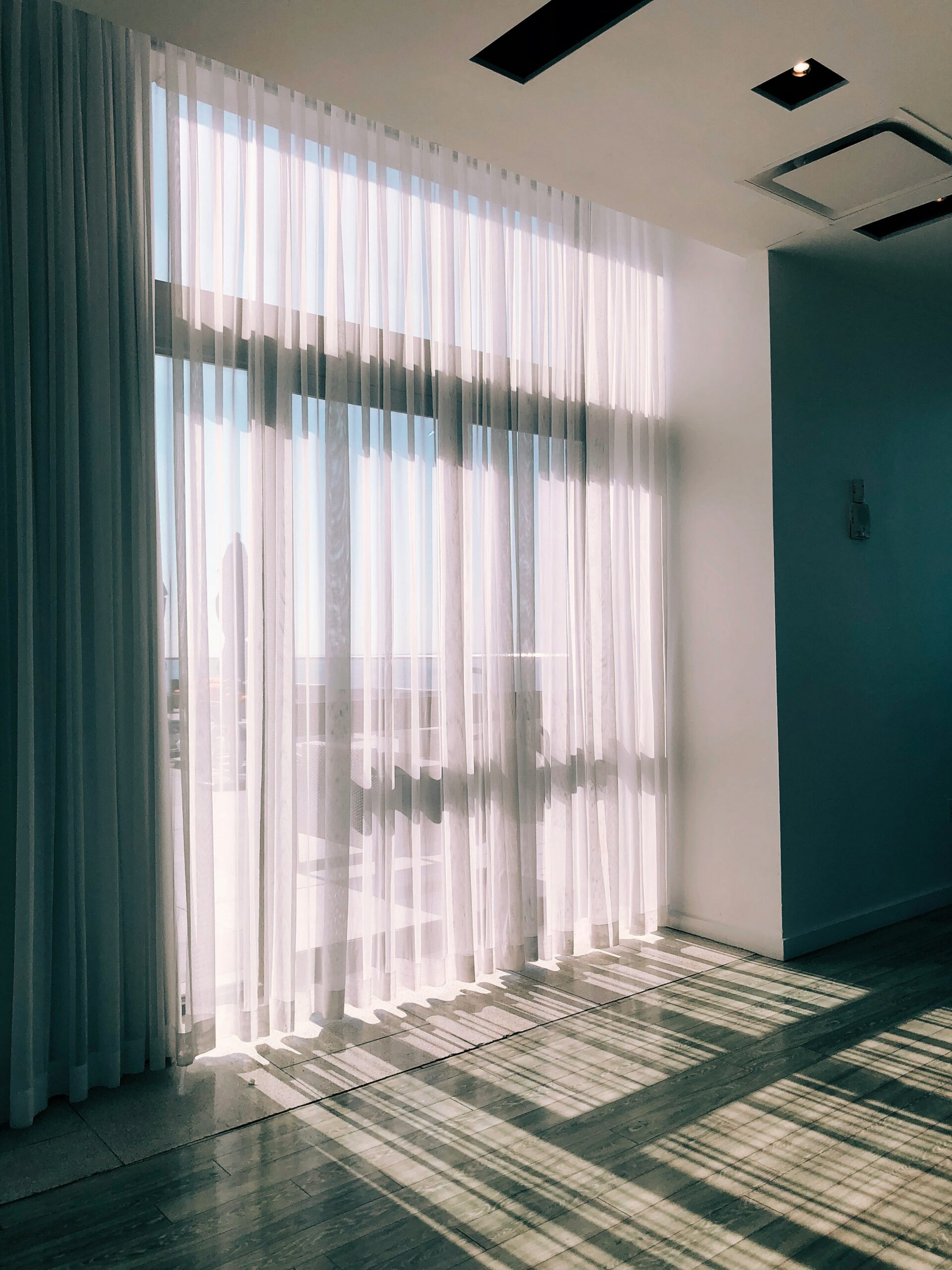
For operations and mobilisation managers working on build to rent homes, there’s a lot to consider. When you consider fixtures and fittings you’re looking to strike a balance between CapEx (capital expenditure – or your upfront investment) and Opex (operating expenditure – the cost of upkeep, cleaning and repair). How does a mobilisation manager make these decisions?
We take a deep dive into blinds and curtains and assess, which is best for build to rent schemes?
Interview with Edward Grimshaw, Operations Director of Regal Blinds Ltd
When you compare costs of curtains versus blinds against lifespan and aesthetics, what are the pros and cons of each?
Depending on specification, many people think a curtain is more luxurious than a blind, and often the price reflects this. Yet a blind can be a more flexible solution and can offer properties such as heat retention and black-out. There’s no right or wrong answer, and quite often a blend of both window furnishing types can be the correct solution.
Both products have a similar lifespan and are only replaced when fashion dictates a change of colour rather than a product failure. It’s worth noting that blinds can take up less space if capacity in and around a glazed section is an issue.
An operations manager might consider operational efficiency to be more important than the cost of a long term investment, or the opposite might be true.
What are some hidden gems that operations or mobilisation managers need to know, when thinking about this specialist field?
It’s imperative that they factor in consumer usability to this equation. For example, heavy duty roller blinds are more suited to student houses and flats as they are harder to damage.
It’s equally important to ensure correct product specification. For example, providing light filtering to living areas and blackout to bedrooms. You’d be simply amazed how many non blackout products get placed into bedrooms to save on cost.
Child safety is paramount. All fixtures must be properly installed and maintained. No chains or cords can be left loose and all must be at the correct lengths to comply with legislation. All products must also meet strict fire retardant standards.
No two windows are the same! All products should be manufactured and installed on a bespoke basis to ensure the consumer receives the most suitable and effective product.
How have the regulations around blind cords changed your industry?
The legislation implemented in 2014 (BS EN 13120) has brought forward a set of rules to increase child safety standards. Blind cord safety is now a standard inspection item during tenant turnover or routine checks. Manufacturers are starting to phase out traditional corded blinds in favour of ‘safe by design’ cordless or motorised systems.
Corded blind systems must include cord tensioners to secure loose cords and breakaway connectors that separate under pressure.
Manufacturers must keep a record of installation dates, product types and compliance documentation.
If you were an operations manager choosing blinds for a landlord, what are the key factors to consider?
- Safety
- Performance
- Long term reliability
- Ease of use
- Cost
- Recyclability
- Ease of maintenance
What kind of blind would you choose and why?
The current market is keen to see eco credentials with window furnishings, as with many other things, and this can be seen with the evolution of new fabrics for both blinds and curtains.
Materials such as bamboo, reeds, jute, and real wood are sustainably harvested out of natural elements, reducing harm on the environment. These options offer benefits beyond environmental protection, including energy efficiency through honeycomb shades, insulated curtains, and solar shades that help reduce energy consumption by keeping homes cool in summer and warm in winter. Cellular shades made from 100% recyclable and sustainable materials are particularly popular, with air trapped in their honeycomb pockets decreasing heat gain during summers and heat loss during winters
These kinds of window furnishings may be an added bonus to environmentally-aware tenants.
When do economies of scale start to kick in?
Typically, from a manufacturing and installation perspective for a bespoke product, efficiency calls into play from some 50+ blind or curtain units over a single phase of install. So for larger rental units, such as blocks of flats, it could be cost effective to have a manufacturer like us make the window furnishings to suit rather than buying off the shelf.
But we can manufacture as little as one blind and travel to fit it for a customer at the far end of the UK (and often we are asked to do so!).
What are the hidden costs of ongoing maintenance that needs to be factored into budgeting?
We usually over-specify the hardware for a product, ensuring the overall lifetime of the curtain or blind is extended. Our commercial stance is to minimise, if not eradicate, ongoing costs for the client. If ever needed, parts are available at cost.
In cheaper window furnishings, such as those bought from high street retailers for example, hardware can often be of poor quality meaning the lifetime of the product is lessened. While for a single window blind this may not be such an issue, if you are a property manager specifying fittings for a block of flats, it’s important to consider the full lifetime cost.
What ‘special notes’ would you include on your welcome pack to a resident moving into a building with blinds that you have stocked?
We’d provide information to help the resident understand the safety aspects of the product, alongside information on how to use and care for the blinds. We would also provide warranty information and a contact email address for any support needs or queries.
Is there a way to remove dead bugs from roller blinds?
Different fabrics have different maintenance methods and cleaning instructions, however loosely speaking, a roller blind can have bugs removed by using a soft brush, microfiber cloth or duster. Blind fabrics should not be scrubbed, nor should any form of detergent be used.
Regal Blinds has been manufacturing blinds and curtains for 23 years with a family history in textiles dating back to 1854. Since 2002, we’ve made over 250,000 bespoke blinds, curtains and track systems, let alone cushions, bedspreads, throws and tie backs!
LetCheck works with property managers, mobilisation managers and others in the build-to-rent sector to help make rental properties robust so that on check-in and check-out, fixtures and fittings can stand the test of time and continue performing for tenants.
 Back to News